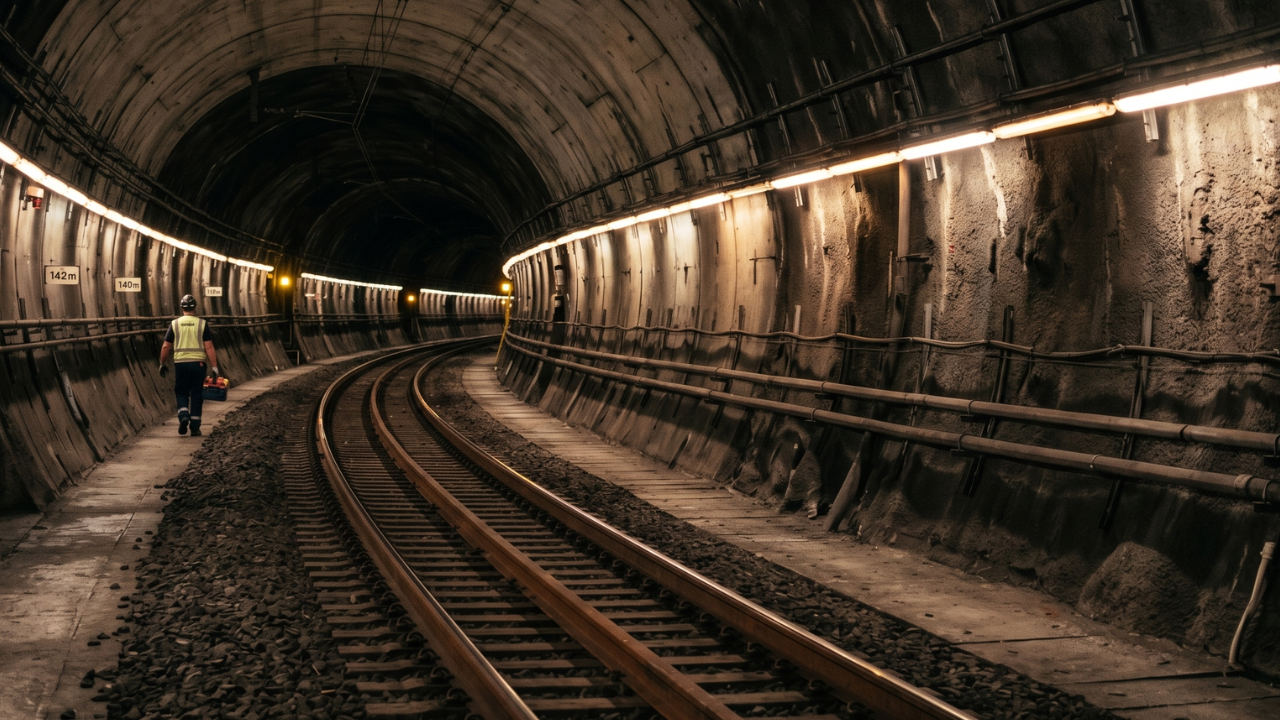
Not all tunnel lighting fixtures are built for tunnels. The differences compound over a 10-to-15-year service life.
Fixtures adapted from warehouses and parking structures waste energy on low-reflectance surfaces, create stroboscopic flicker, and produce glare for approaching train operators. Purpose-built optical engineering changes every downstream outcome, from NFPA 130 compliance to total cost of ownership. The data inside is modeled in AGi32 and validated across a 660-fixture, 9,900-linear-foot transit tunnel deployment.
Inside this whitepaper:
Why tunnel geometry and 15-to-40-foot fixture spacings break generic LED fixtures
How engineered silicone optics eliminate the stroboscopic effect without adding fixtures or power
How precision optics deliver 3:1 uniformity at 6 watts versus 8-to-12:1 at 40-to-60 watts for diffused-lens fixtures
Three operating modes that let a single permanent system replace temporary work lighting
$2.7 million in documented 10-year savings from a 660-fixture MTA/NYCT under-river tunnel deployment
Download now to evaluate your next tunnel lighting specification on engineering merit.