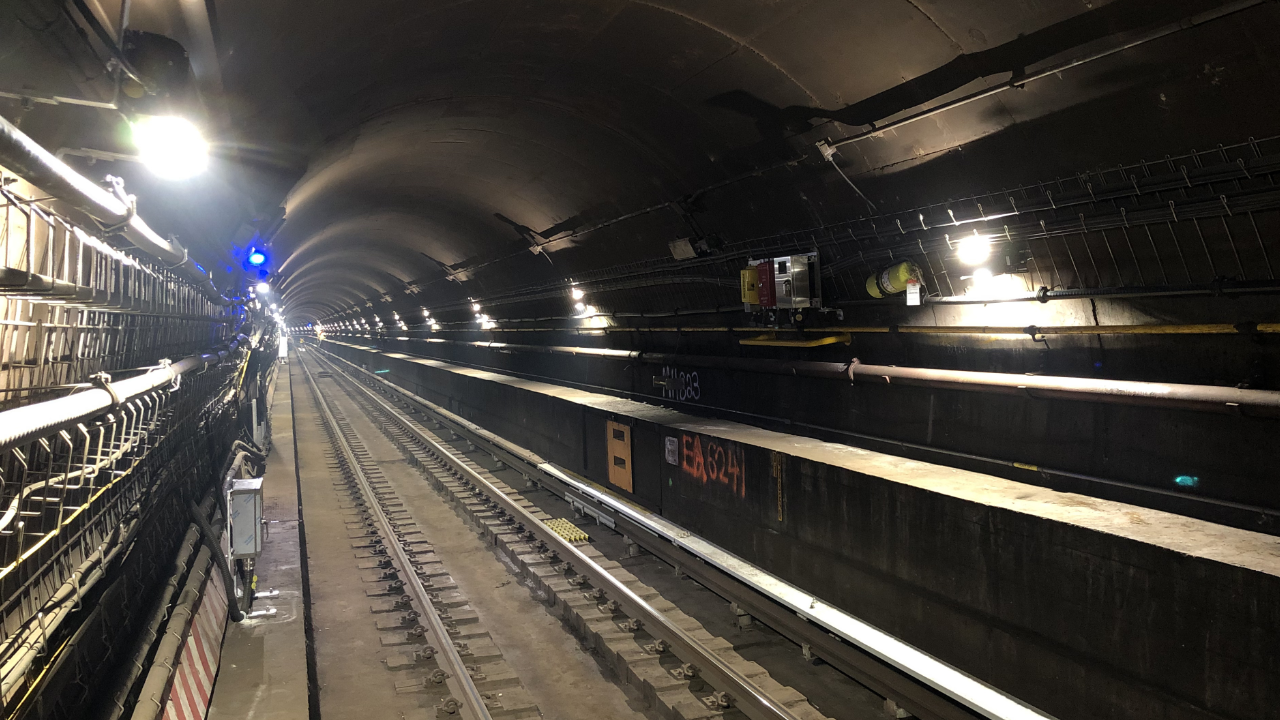
Your tunnel lighting probably works fine. Until it doesn't.
Legacy fixtures on emergency circuits with 100-foot spacing cannot deliver what NFPA 130 and modern agency standards require. Centralized backup systems create single points of failure. And every maintenance window burns time on temporary lighting setup that could go toward state-of-good-repair work. These are not failures of attention. They are gaps between infrastructure built decades ago and standards that still have not caught up with available technology.
This whitepaper argues that the industry needs to rethink how tunnel lighting gets funded, specified, and prioritized. Tunnel emergency lighting sits at the intersection of three pressures that are not going away: evolving regulatory requirements, constrained capital budgets, and the operational reality of limited track access windows.
Inside this whitepaper:
Why current standards and legacy systems leave a growing liability gap in tunnel emergency lighting, and why the industry needs to move faster
The case for bundling: how agencies can close compliance gaps by folding lighting into signals, track, and communications projects already on the capital plan
What proven technology, including remote monitoring, dual-function fixtures, and fixture-level battery backup, makes possible today versus what most specifications still require
Planning-cycle questions to pressure-test your current tunnel lighting posture and surface near-term opportunities
Download now to join a growing conversation about raising the bar on tunnel fire-life-safety.